
The Fed Raised Rates. What Does That Mean for Your Money?
At its September meeting, the Federal Reserve raised its target federal funds rate by 0.25%, bringing the target range to 3.75% – 4.00%. This is the first rate increase since 2023 and is in response to higher inflation, primarily due to oil prices. The most recent Consumer Price Index report, for instance, showed that prices rose 3.4% year-over-year in August, driven largely by energy prices that are up 16.3%.
This rate hike was largely anticipated by markets. Current expectations are for another rate hike in December, and perhaps most importantly, that rates may not fall again until 2028.
When it comes to investing, it matters why the Fed is raising rates. In 2022, the Fed was seen as being too slow to react to rapidly rising inflation, so swift rate hikes were negative for markets. Today, higher inflation is typically viewed as the result of higher oil prices, which will eventually be resolved. This is one reason markets have not reacted as dramatically this cycle.
Although rate hikes are often viewed as slowing the economy and being negative for markets, this is not always the case. For example, if slightly higher policy rates help to stem inflation, while ensuring that underlying growth continues, this can be positive for both stocks and bonds. In the long run, what drives interest rates and Fed decisions are factors such as economic growth and productivity. Questions around artificial intelligence and the labor market will likely play a larger role than short-term oil prices when it comes to where rate policy goes in the next few years. Staying focused on your long-term financial goals and maintaining a diversified portfolio remains the most reliable path through periods of changing interest rates.
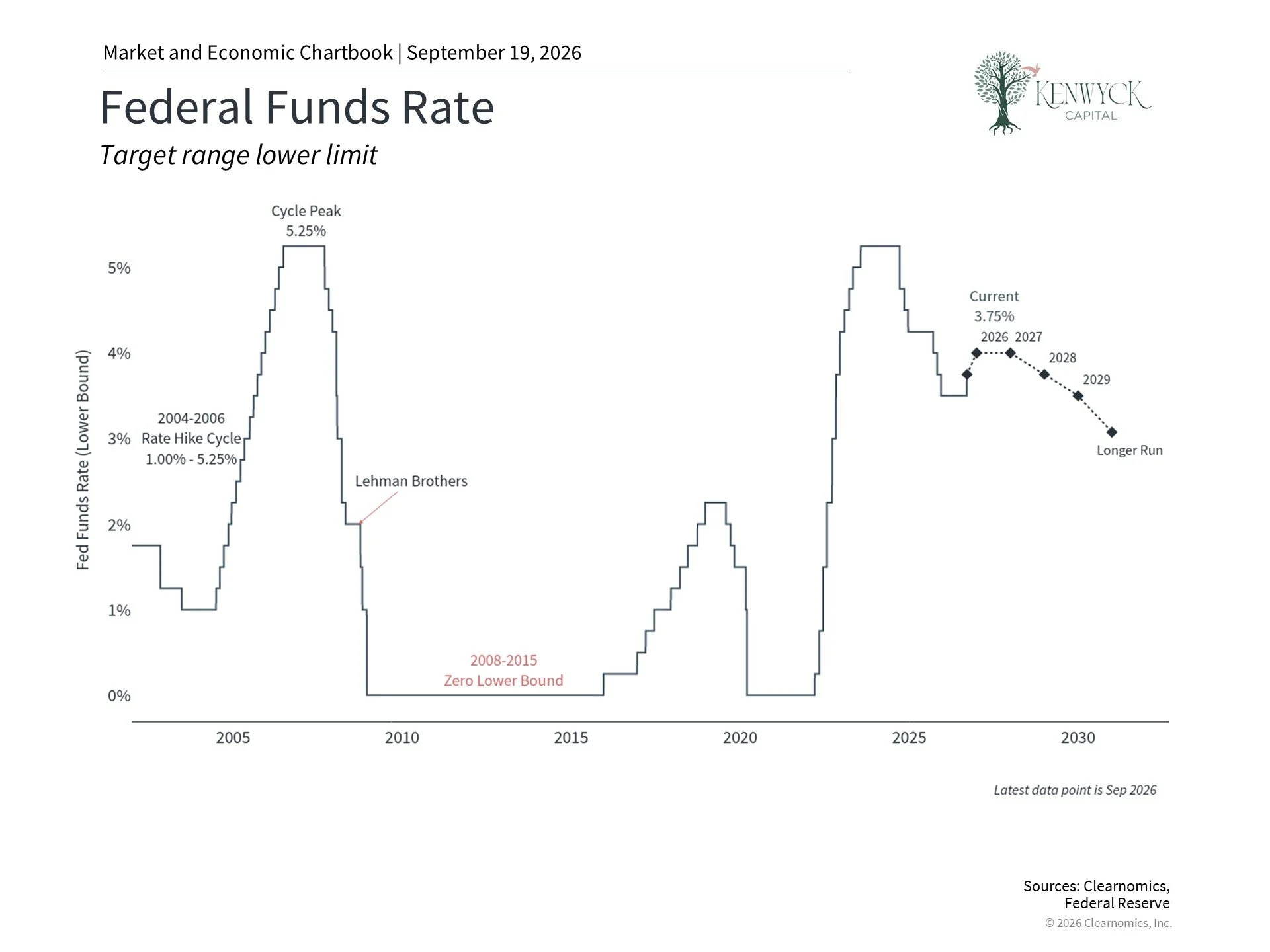
The included chart shows the history of Fed rate hike cycles, which helps illustrate how these policy moves have played out across different economic environments and why context matters so much.
But what does that actually mean for you?
The federal funds rate isn't the rate you receive on your savings account or pay on your mortgage. However, it influences interest rates throughout the economy, particularly shorter-term rates.
For savers: Higher rates can continue to make high-yield savings accounts, money market funds, CDs, and short-term fixed-income investments attractive places for money earmarked for near-term goals.
For borrowers: Variable-rate debt can become more expensive, making this a good time to review credit cards, lines of credit, and upcoming financing decisions.
For investors: A Fed decision alone generally isn't a reason to change a long-term investment strategy. Markets are forward-looking, and interest rates are only one of many factors affecting investment returns.
The Takeaway:
Instead of asking, “What should I do because the Fed raised rates?” a better question may be, “Is my cash, debt, and investment strategy still aligned with what this money needs to do for me?”